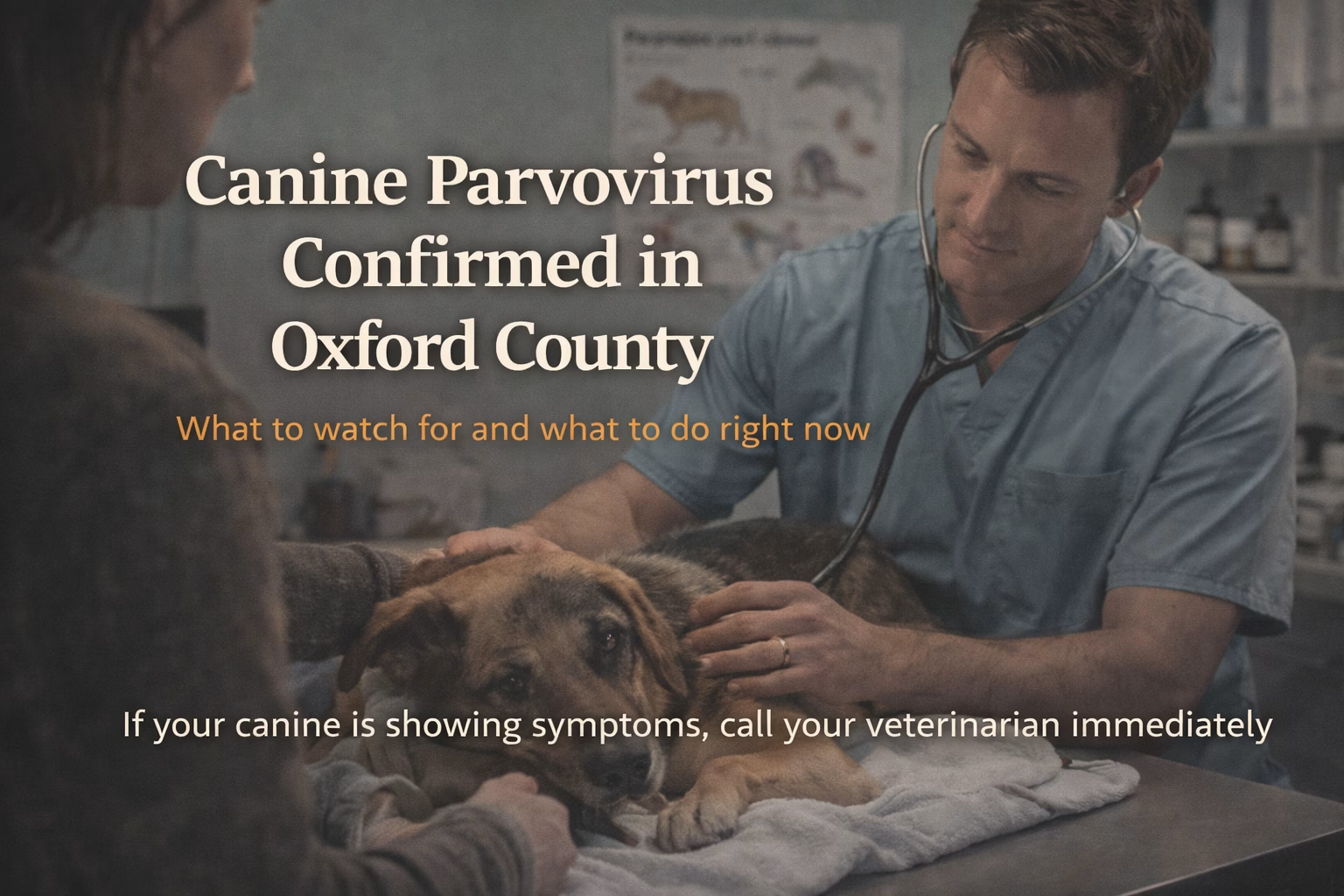
Canine parvovirus has been confirmed in Oxford County, including right here in Sumner. Cases have been reported across Maine since late 2024, and as of spring 2026, veterinary clinics from Midcoast to Augusta are reporting a significant increase in cases. This is not a distant problem. It is here, and if your dog is not vaccinated, you need to take this seriously right now.
If your dog is showing symptoms, call your veterinarian immediately. Do not wait. Every hour matters with parvo.
The Short Version
- Parvovirus is active in Oxford County, including Sumner, and spreading statewide.
- It is highly contagious, often fatal in unvaccinated dogs, and has no cure. Treatment is supportive only.
- Puppies and unvaccinated dogs are most at risk.
- The vaccine is effective, inexpensive, and widely available.
- The virus survives in soil and on surfaces for months to years, including through a Maine winter.
- Symptoms: severe vomiting, bloody diarrhea, extreme lethargy, loss of appetite. If you see these, call your vet now.
- Treatment can cost hundreds to thousands of dollars. The vaccine costs $20 to $100.
What Is Parvovirus?
Canine parvovirus, commonly called parvo, is a highly contagious viral disease that attacks a dog’s gastrointestinal tract and bone marrow. It is one of the most serious infectious diseases dogs can contract.
The virus targets cells in the body that replicate quickly. That means the lining of the intestinal tract and the bone marrow take the hardest hit. The intestinal damage leads to severe vomiting and diarrhea. The bone marrow damage shuts down white blood cell production, which is exactly the opposite of what a dog needs when fighting a serious infection. As Dr. Ai Takeuchi, co-medical director at Eastern Maine Emergency Veterinary Clinic, described it: the dog ends up fighting a devastating virus with no immune army to defend itself.
Parvo is not new, but the current statewide outbreak has been unusual in its persistence. Cases began rising in Maine in late 2024 and have not let up. Confirmed cases have been reported in Aroostook County, the Bangor area, the Midcoast, Augusta, Portland, and Oxford County. The Kennebec Valley Humane Society temporarily closed in November 2025 due to an outbreak. Dog parks in Fort Fairfield and Caribou were closed. As of late March 2026, the Midcoast Animal Emergency Clinic in Warren was reporting a significant new spike.
Oxford County Has Confirmed Cases, Including Sumner
In October 2025, the Rumford Police Department issued a public advisory after confirmed cases of canine parvovirus were reported in Oxford County. Now, as of April 2026, I am aware of confirmed positive cases in Sumner. I am not going to put a spotlight on any specific household, but residents in Sumner and surrounding towns need to know this virus is actively present in our area right now.
The virus can survive in the environment for months after an infected animal is no longer present. Contaminated ground does not clean itself when the animal is gone. That means exposure risk in the area does not disappear quickly.
I am not a veterinarian, and I cannot tell you exactly where contamination exists. What I can tell you is that an unvaccinated dog in western Maine right now is at real risk, and the situation in Sumner makes that more urgent, not less.
How Parvo Spreads
Parvo spreads through contact with infected feces, direct contact with an infected dog, or contact with contaminated surfaces. That includes soil, kennels, food and water bowls, and even the soles of shoes that have walked through a contaminated area.
This is what makes parvo so difficult to avoid for unvaccinated dogs. A dog does not need to encounter a visibly sick animal to be exposed. They can pick it up from a trail, a patch of grass at a rest stop, a dog park visited weeks earlier, or from surfaces inside your home if you walked through a contaminated area and tracked it in.
The virus survives in the environment for months and possibly years. It can withstand freezing temperatures, meaning a Maine winter does not kill it off. Standard cleaning products are often not enough to eliminate it. A diluted bleach solution is one of the few disinfectants effective against parvo on surfaces, but soil contamination is much harder to address.
Who Is Most at Risk
Puppies are the most vulnerable. A puppy that has not completed its full vaccination series has very limited protection. This is one of the most critical periods for a young dog’s health, and it is also the period when owners are most tempted to socialize them at parks, play groups, and other public spaces.
Adult dogs that are unvaccinated or overdue on boosters are also at serious risk. Dogs with compromised immune systems face elevated danger regardless of vaccination history.
Vaccinated, healthy adult dogs have strong protection. The distemper combination vaccine, which covers parvovirus along with distemper and other diseases, gives dogs at least three years of immunity when kept current. If your dog is up to date, that is exactly where you want them to be right now.
Symptoms: What to Watch For
Parvo symptoms typically appear three to seven days after exposure. The disease moves fast. By the time symptoms are obvious, the dog is already seriously ill.
Watch for:
- Severe vomiting
- Diarrhea, often bloody
- Extreme lethargy
- Loss of appetite
- Abdominal pain or bloating
- Fever, or in later stages, abnormally low body temperature
- Rapid dehydration
Do not take a wait-and-see approach with these symptoms. If your unvaccinated or partially vaccinated dog is showing any combination of these signs, call your veterinarian immediately and tell them you suspect parvo before you bring the dog in. Clinics need to prepare for a potentially contagious patient to protect other animals in the waiting room.
Treatment: Brutal, Expensive, and Not Guaranteed
There is no cure for parvovirus. There is no antiviral medication that eliminates it. Treatment is entirely supportive, meaning veterinarians work to keep the dog alive and stable while its immune system fights the virus on its own.
Supportive treatment typically involves hospitalization with IV fluids to combat severe dehydration, medications to control vomiting and nausea, antibiotics to prevent secondary bacterial infections that exploit the compromised immune system, nutritional support, and around-the-clock monitoring.
Hospitalization can last several days. Dogs with parvo require isolation from other patients. The level of care is intensive.
The cost reflects that. Treatment can range from a few hundred dollars on the low end to ten thousand dollars or more for severe cases requiring extended hospitalization. One Maine family described pulling together money for their dog’s antibody treatment and hospital stays while a family member stayed up through the night at home administering fluids and medications. Even with all of that, survival is not guaranteed.
Survival rates depend heavily on how quickly treatment begins and how severe the case is. Puppies have a lower survival rate than adult dogs even with treatment. Dogs that do not receive veterinary care face a very high mortality rate.
The distemper combination vaccine that prevents all of this costs between $20 and $100. There is no comparison.
Prevention: What You Can Do Right Now
Vaccinate
This is the single most important thing you can do. The parvo vaccine is part of the standard distemper combination series and is highly effective when administered correctly. Puppies need a full series of shots, typically starting at 6 to 8 weeks and continuing every 3 to 4 weeks until they are 16 weeks old. A single dose does not provide full protection. Adult dogs need boosters to maintain immunity.
If you are not sure whether your dog is current on vaccines, call your vet. If you do not have a regular veterinarian, contact your nearest low-cost clinic. Getting this done is not complicated. Not doing it is the problem.
Avoid High-Risk Areas With Unvaccinated Dogs
Dog parks, pet supply stores, rest areas, trail heads, and any location where dogs from the general public congregate are higher risk environments. Until your dog has completed their vaccination series and has full immunity, keep them away from these places.
This is not about being paranoid. It is about understanding how parvo actually spreads. A perfectly healthy-looking dog can be shedding the virus before it shows symptoms. The ground itself can be contaminated with no visible sign. Unvaccinated dogs should not be in those spaces during an active outbreak period.
Practice Good Hygiene
If you have been around dogs of unknown vaccination status or in areas with confirmed exposure, changing your shoes before entering your home and washing your hands reduces the risk of tracking the virus in. This matters most if you have puppies or unvaccinated dogs at home.
If You Suspect Exposure
If your dog may have been exposed to parvo, contact your veterinarian right away. Do not bring them to a dog park or allow contact with other dogs while you are waiting to find out. Quarantine them from other dogs in your household as a precaution.
What the News Has Been Reporting
The current situation has been covered by news outlets across Maine. Here is a summary of what has been reported:
- The Midcoast Animal Emergency Clinic in Warren reported a significant spike in cases across Midcoast and Augusta areas in late March 2026, with concerns about contamination at Quarry Hill Dog Park in Portland. (WABI-TV, March 26, 2026)
- The Eastern Maine Emergency Veterinary Clinic in Holden reported one to two cases per week as of early April 2026, noting the Midcoast area has seen even higher rates. (WABI-TV, April 2, 2026)
- The Rumford Police Department issued an advisory after confirmed cases in Oxford County in October 2025. (NEWS CENTER Maine, October 27, 2025)
- Cases have been rising in Maine since late 2024, with Houlton and Aroostook County seeing confirmed cases in September 2025, leading to dog park closures in Fort Fairfield and Caribou.
- The Kennebec Valley Humane Society temporarily closed in November 2025 due to a parvo outbreak. (NEWS CENTER Maine)
- Treatment costs can reach ten thousand dollars or more, while the preventive vaccine costs between $20 and $100. (Central Maine, November 2, 2025)
A Note From ACO Holmes
As the Animal Control Officer for Buckfield, Hartford, Sumner, West Paris, Stoneham, and the Oxford County Unorganized Territories, I handle stray animals regularly. That means I am in contact with dogs of unknown health and vaccination status on a regular basis. I cannot guarantee that any stray animal I encounter has not been exposed to parvo or other infectious disease.
If a stray dog comes into contact with your vaccinated dog, the risk is significantly lower. If your dog is not vaccinated, that changes the equation considerably.
I am not a veterinarian and I am not in a position to diagnose illness or advise on medical treatment. What I can tell you is that parvo is real, it is here in our towns, and the vaccine works. If your dog is not current, please call your vet this week.
For questions about animal welfare in Buckfield, Hartford, Sumner, West Paris, Stoneham, or the Oxford County Unorganized Territories, reach Oxford County Dispatch at 207-743-9554, Option 0.
For more on vaccine requirements in Maine, see the Rabies Vaccination post or visit the Animal Control FAQ.