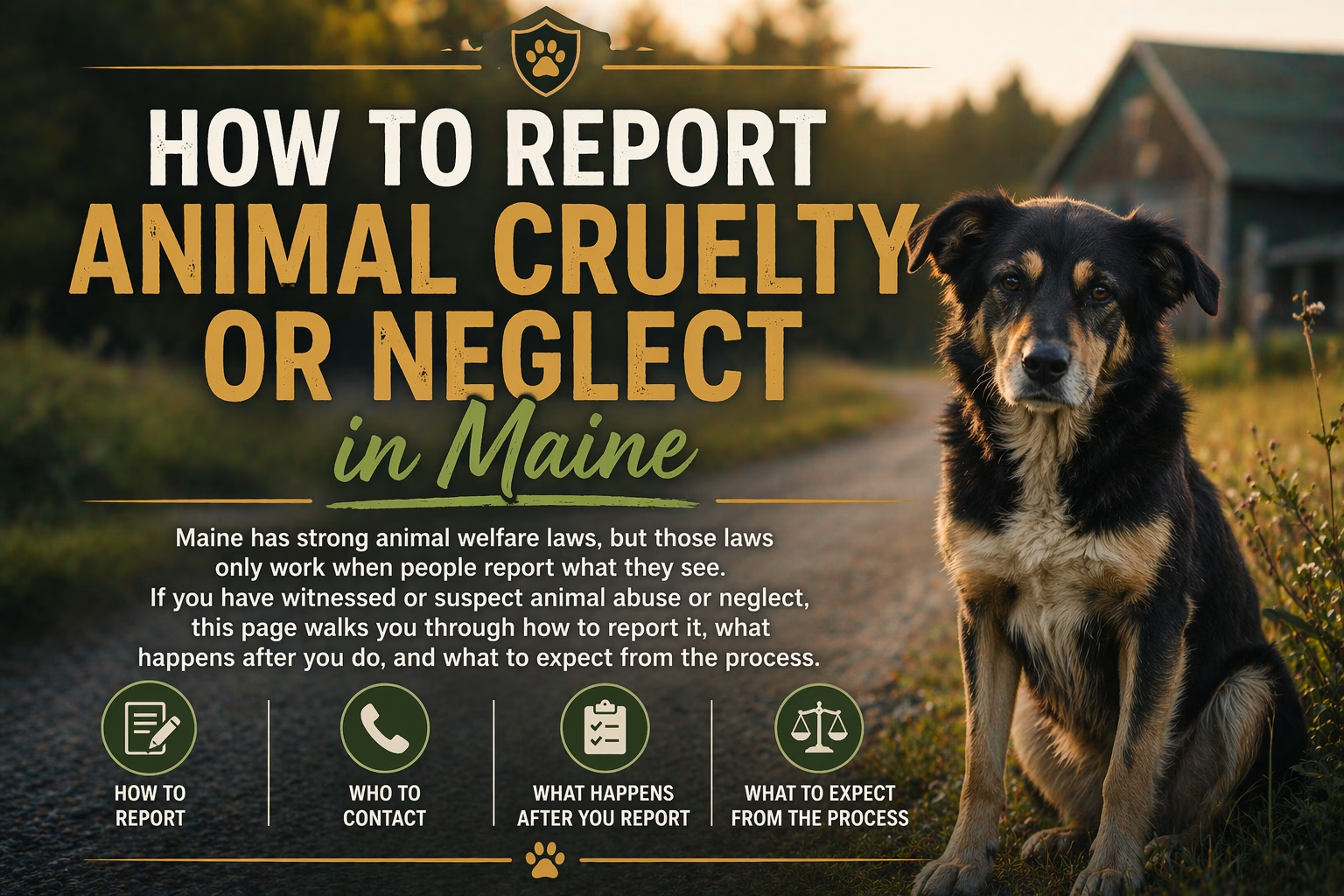
Maine has strong animal welfare laws, but those laws only work when people report what they see. If you have witnessed or suspect animal abuse or neglect, this page walks you through how to report it, what happens after you do, and what to expect from the process.
What Counts as Animal Cruelty in Maine
Maine law covers a wide range of conduct under its animal cruelty statutes. Under 7 § 4011, cruelty includes failing to provide necessary food, water, medical attention, or shelter. It also includes injuring, tormenting, overworking, or abandoning an animal. You do not have to witness active abuse to have a reportable concern. Neglect, which is failure to provide basic care, is also a violation.
More serious conduct, including intentional cruelty, falls under Maine Title 17 and is a criminal matter. Those cases are handled by Maine Humane Agents through the Maine Animal Welfare Program. Humane agents are state employees. Their investigations, seizures, and any resulting animal housing costs are absorbed at the state level, not by the municipality.
For Serious Cruelty Cases: Contact the State Directly
If you are dealing with a situation that looks like active cruelty, hoarding, large-scale neglect, or conditions that may require seizure of animals, the most important call you can make is to the Maine Animal Welfare Program. Do not wait for it to come through me first.
Here is why that matters for towns like Buckfield, Hartford, Sumner, West Paris, and Stoneham. These are small municipalities with limited budgets. When an animal cruelty case involves seizure, the impounded animals have to be housed somewhere, and that housing costs money. If a case is handled as a local animal control matter rather than a state humane agent case, those costs can fall on the municipality. The towns in my coverage area do not have the tax base to absorb the cost of housing a large number of seized animals for an extended investigation. The state program exists specifically to handle those situations at the state level.
Reporting directly to the Maine Animal Welfare Program is not going around me. It is using the right tool for the job. I can still be involved and will coordinate as needed. But for anything that might involve seizure or criminal charges, the state needs to be in the loop from the start.
Maine Animal Welfare Program
Phone: 207-287-3846 | Toll-free: 1-877-269-9200
Email: animal.welfare@maine.gov
Hours: Monday through Friday, 7:30 AM to 4:30 PM
For after-hours cruelty emergencies, call the Maine State Police Bangor Barracks at 207-973-3700. They will contact an Animal Welfare Program representative on your behalf.
For General Welfare Complaints: Start with Dispatch
For situations that involve neglect, improper shelter, lack of food or water, or other civil violations under Title 7, starting with dispatch is the right move. I will respond, assess the situation, and document what I find. Many welfare complaints can be resolved through a compliance process without requiring seizure or state involvement.
Oxford County Dispatch: 207-743-9554, Option 0
Do not rely on social media posts or emails to animal control as your primary report. Those do not create the official record that drives a response. A phone call to dispatch does.
What to Have Ready When You Call
- The address or location of the animals and the owner if known
- A description of what you observed, including dates and times if possible
- The species and number of animals involved
- Any photos or video you have taken, noted for your records
- Your name and contact information, though anonymous reports are accepted
Anonymous reports are accepted by both dispatch and the state program. Providing your contact information helps if follow-up is needed, but it is not required.
What Happens After You Report
For civil welfare complaints routed through dispatch, I respond to investigate. I assess the condition of the animals, document what I find, and determine whether the situation constitutes a violation under Title 7. For civil violations, I can issue a compliance notice requiring the owner to correct the problem within a set timeframe and follow up to confirm compliance.
For cases routed to the Maine Animal Welfare Program, a humane agent will be assigned. Humane agents have full law enforcement authority, can execute search warrants, seize animals, pursue criminal charges, and manage the resulting caseload at the state level. That is the appropriate channel when the scale or severity of the situation goes beyond what a civil compliance process can address.
What You Should Know About the Process
Investigations take time. Neither I nor the state program can share case details with complainants due to privacy requirements. That does not mean nothing is happening.
If you believe the situation is an emergency and animals are in immediate danger, say so clearly when you call. That changes the response priority at both the local and state level.
Keep your own notes. Write down what you observed, when you observed it, and when you reported it. If the case goes further, that documentation may be useful.
Quick Reference
| Situation | Who to Call |
|---|---|
| Neglect, improper shelter, lack of food or water, civil welfare concern | Oxford County Dispatch: 207-743-9554, Option 0 |
| Active cruelty, hoarding, large-scale neglect, or anything that may require animal seizure | Maine Animal Welfare Program: 207-287-3846 or 1-877-269-9200 |
| After-hours cruelty emergency | Maine State Police Bangor Barracks: 207-973-3700 |
- For more on Maine’s animal cruelty law, see Animal Cruelty (7 § 4011).
- For Maine’s proper shelter requirements, see Proper Shelter for Animals (7 § 4015).
- For more on Maine animal laws generally, see the Animal Control FAQ.