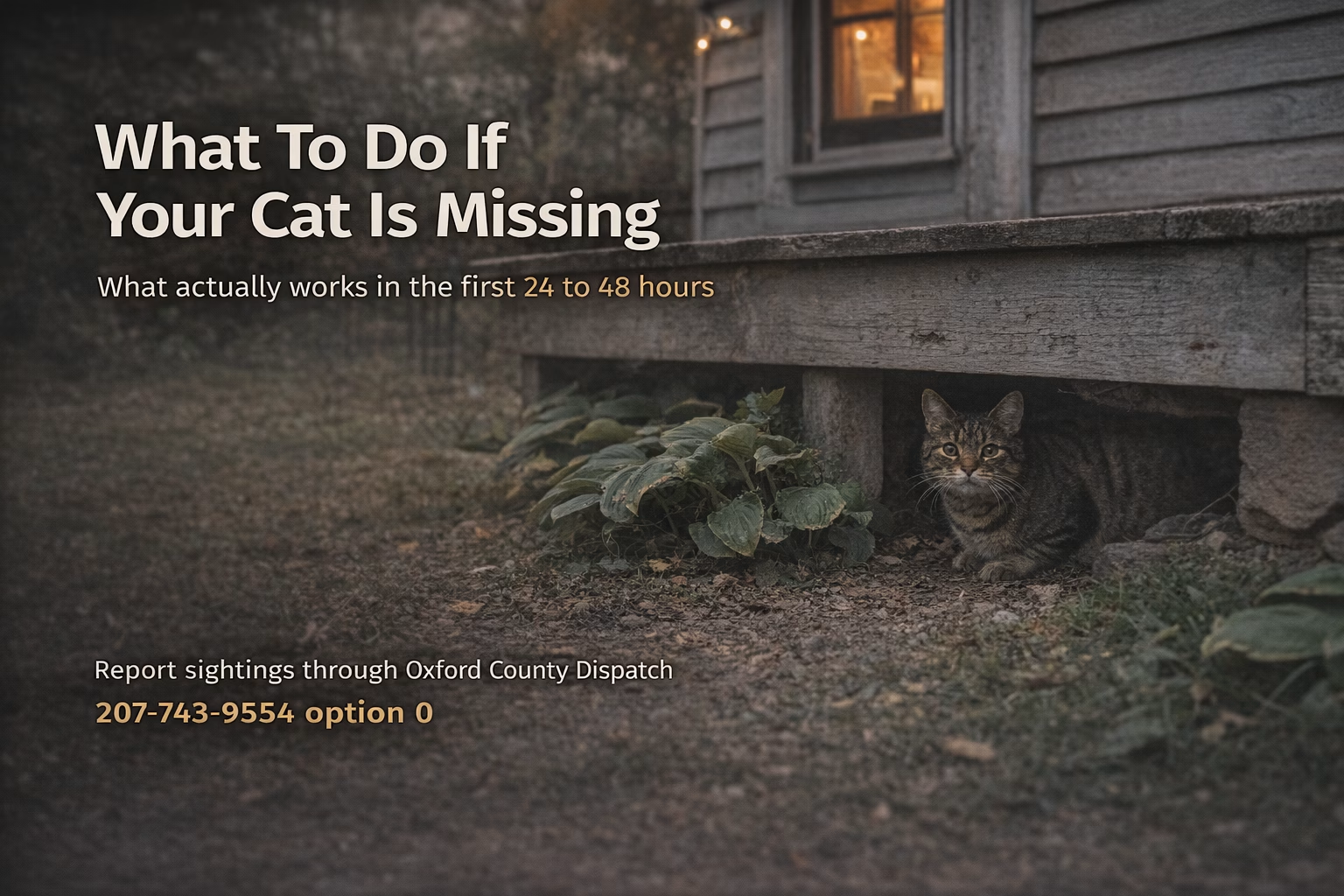
If your cat is missing, the first thing to know is that most cats that go missing in western Maine are found within a short distance of home. They are usually hiding, not gone. The steps you take in the first 24 to 48 hours make the biggest difference. This guide covers what actually works, based on how lost cats behave and what I see in the field.
If your cat is missing in Buckfield, Hartford, Sumner, West Paris, Stoneham, or the Oxford County Unorganized Territories, report it through Oxford County Dispatch at 207-743-9554, option 0. Getting the report into the system means I know to watch for your animal during any calls in the area. If you are outside those towns, you can find your local Animal Control Officer through the State of Maine.
Your Cat’s Personality Changes How You Search
Not all lost cats behave the same way, and your approach should match your cat’s temperament. A bold, social cat may eventually come out if you call softly or leave food nearby. A shy or skittish cat is a different situation entirely. That cat is almost certainly hiding within a short distance of home, staying completely silent, and will not come out even for you. Meowing would give away its location to predators, so it won’t. Don’t take silence as a sign that your cat isn’t there.
Knowing which cat you have helps you set realistic expectations and choose the right techniques.
Search Close to Home First — and Search It Yourself
When cats are frightened or disoriented, they hide. They do not usually run far. An indoor cat that got outside is especially likely to be within a few houses of your property, tucked under a porch, inside a shed, or wedged behind something in a neighbor’s yard.
The key word there is neighbor’s yard. Asking a neighbor to “look around” is not enough. They are not going to get on their hands and knees and check under their deck or behind their water heater for someone else’s cat. That is your job. Ask for permission to enter their yard and do the searching yourself. Check every enclosed space, every outbuilding, every vehicle with an open window. Cats can walk into a barn or workshop and get shut in without anyone knowing.
Search at dawn and dusk when things quiet down. Bring something familiar: a worn shirt, their food dish, a favorite toy. Sit quietly and listen. Do not rely on calling their name. A frightened cat may not respond even to a voice it knows.
Do Not Chase
This is one of the most common mistakes people make. If you spot your cat and it runs, do not follow. A scared cat that bolts into the woods or under a building because someone chased it is a much harder recovery. Stay low, stay calm, and let them come to you.
Put Up Physical Signs
Facebook posts help, but physical signage is what catches the eye of people who aren’t in local groups. Print large, bright posters and put them at nearby intersections where drivers will see them. Keep the text minimal: a clear photo, the word MISSING, your town, and a phone number. You want someone who just drove past to remember it.
Post them at eye level on telephone poles near where your cat was last seen, and at the nearest busy intersections. The goal is visibility, not information density. You can use the Missing Pet Poster Generator on this site to put something together quickly.
Set Up a Feeding Station with a Camera
Before jumping to trapping, start with a feeding station. Place food near where your cat was last seen and set up a trail camera pointed at it. Check the footage regularly. This tells you two important things: whether your cat is actually in the area, and when they are moving.
Trapping without confirming your cat is present wastes time and creates problems. A trap set with no specific target can catch a neighbor’s pet, a community cat, or wildlife, and then you are stuck with an animal you were not prepared for. If the camera shows your cat is coming to the station, that is when to reach out to me through dispatch at 207-743-9554, option 0. We can talk through next steps from there.
Get the Word Out Locally
Post on local Facebook groups with a clear photo, your town, the date last seen, and your contact number. Avoid posting your full address publicly. Also be cautious about posting your cat’s name. Scammers actively monitor lost pet posts and will use specific details to make a fake “found” claim sound convincing.
Contact nearby shelters directly. For cats in my service area, the relevant contacts are:
- Responsible Pet Care in Oxford: serving Buckfield, West Paris, and Hartford
- Harvest Hills Animal Shelter in Fryeburg: serving Sumner, Stoneham, and the Oxford County Unorganized Territories
Call them, don’t just check their websites. Describe your cat in detail and follow up every couple of days. Animals brought in as strays do not always get entered into online systems right away.
Skip the Dirty Litter Box
You will see advice online suggesting you put your cat’s used litter box outside to attract them home. There is no solid evidence this works, and it is not a technique used by professional lost pet recovery networks. Stick to a worn piece of clothing or a used pillowcase near your door. Your scent is the lure, not the litter.
How Long Do Cats Stay Missing?
Most cats that come home do so within the first few days. Some take longer, especially if they have moved out of their immediate area or are hiding from something that spooked them. Do not stop searching after a week. Cats have come home after months. Keep checking shelters and keep your post active in local groups.
Indoor cats that got outside tend to stay closer and hide longer. Outdoor cats with established territory may range further but are more likely to be recognized by neighbors.
Microchipping and ID Tags
A microchip is the most reliable way to get your cat back if someone finds them and brings them to a shelter or vet. Shelters scan for chips on intake. If your cat is not chipped and is found by a good Samaritan, there may be no way to connect them back to you. ID tags on a breakaway collar are also worth having. The goal is to give anyone who finds your cat a fast path back to you.
For more on lost and found animals in western Maine, see the Lost a Pet? Report It! page or the Animal Control FAQ. To report a missing animal in Buckfield, Hartford, Sumner, West Paris, Stoneham, or the Oxford County Unorganized Territories, call Oxford County Dispatch at 207-743-9554, option 0. If you are outside my coverage area, you can find your local Animal Control Officer through the Maine Department of Agriculture, Conservation and Forestry.