Not sure which kennel license applies to you? See the Maine Kennel License Guide.
Maine law requires a breeding kennel license for anyone operating a breeding kennel as defined under section 3907. The license comes from the Maine Department of Agriculture, Conservation and Forestry. Because breeding kennel licensing affects responsible breeding operations across Buckfield, Hartford, Sumner, West Paris, Stoneham, and the Oxford County Unorganized Territories, understanding what the law requires helps both breeders and the public know what standards apply.
You can read the full statute at legislature.maine.gov/statutes/7/title7sec3931-A.html.
What Is a Breeding Kennel
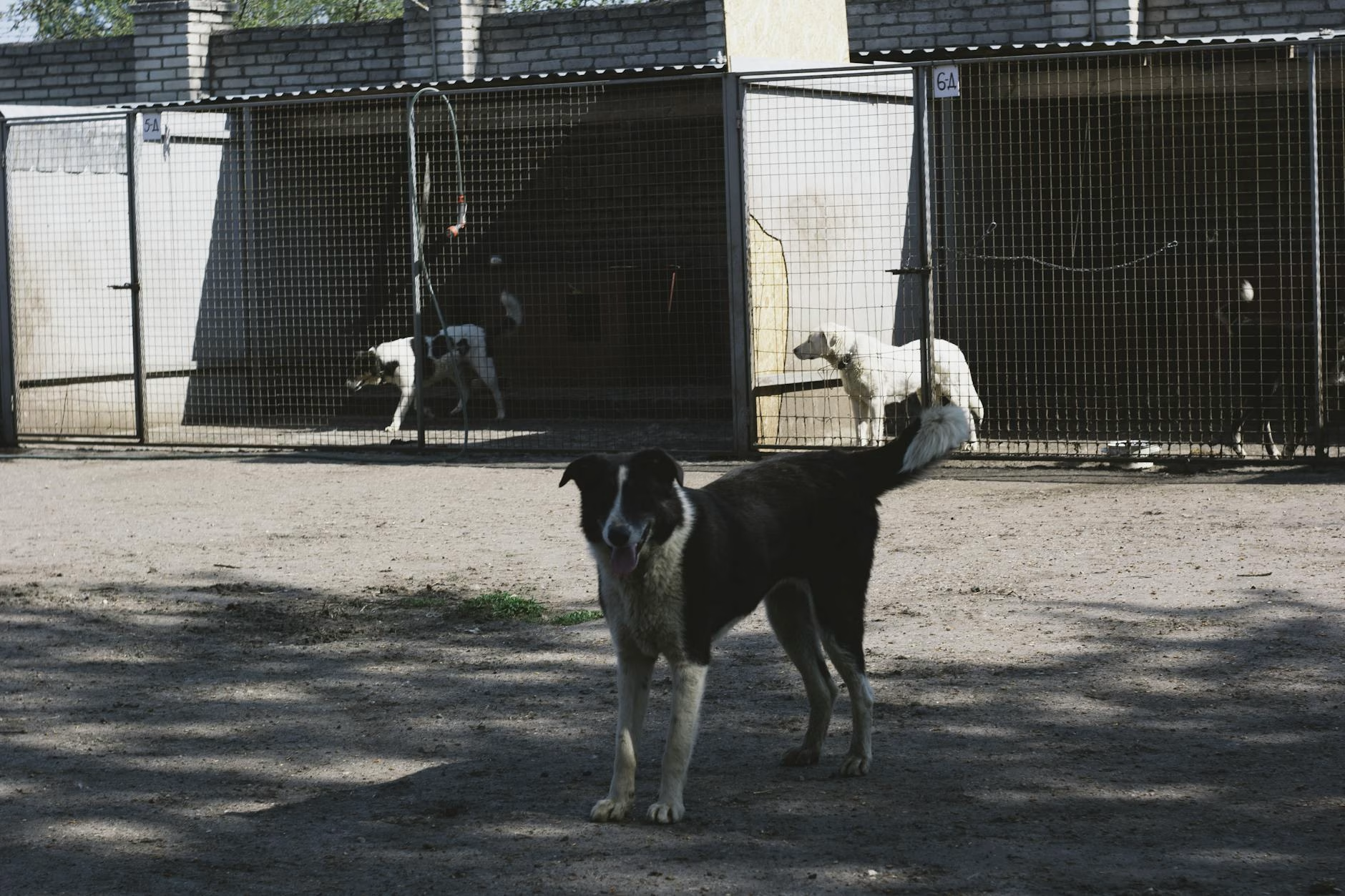
Section 3907 defines a breeding kennel as a location where 5 or more adult female dogs or cats capable of breeding are kept and some or all of the offspring are offered for sale, sold, or exchanged for value. It also includes any location where more than 16 dogs or cats raised on the premises are sold to the public in a 12-month period. The trigger is adult females capable of breeding combined with selling offspring, not the total number of dogs on the property. If you keep dogs for hunting, show, training, sledding, competition, field trials, or exhibition and hold a state kennel license under 7§3932-B, you do not need a breeding kennel license as long as you sell no more than 16 dogs within a 12-month period.
License Categories and Fees
The department assigns breeding kennels to one of three categories based on the number of adult females capable of breeding. Fees were updated in 2025 under PL 2025, c. 414.
- Category 1 breeding kennel maintains at least 5 but no more than 10 female dogs or cats capable of breeding. The annual fee is $125.
- Category 2 breeding kennel maintains at least 11 but no more than 20 female dogs or cats capable of breeding. The annual fee is $150.
- Category 3 breeding kennel maintains 21 or more female dogs or cats capable of breeding. The annual fee is $200.
When applying, breeders must state the number of breeding-capable females at the facility. The department uses that number to assign the correct category.
License Duration and Late Fees
The breeding kennel license expires 12 months after the date of issuance. Operators must renew annually. If a licensee fails to renew within 30 days of expiration, a late fee equal to 50% of the required license fee applies. That late fee goes into the Animal Welfare Fund.
License Number Requirements
A licensed breeding kennel must prominently display its state-issued license number in all advertising. In addition, the kennel must provide that number to any person purchasing or receiving an animal. This gives buyers a way to verify that an operation is licensed and helps authorities track compliance.
Conditional Breeding Kennel License
New applicants who do not currently hold a valid license receive a conditional breeding kennel license first. That conditional license stays active until the kennel passes inspection under section 3936. If the kennel cannot meet minimum standards within 6 months of the initial inspection, the department may revoke or suspend the conditional license through an administrative proceeding under Title 5, chapter 375, subchapter 5.
Inspections
The commissioner, a state humane agent, or a licensed veterinarian acting at the commissioner’s direction may enter a breeding kennel at any reasonable time to conduct examinations and tests for contagious or infectious diseases and to check compliance with the law. If the facility also serves as a residence, the inspection is limited to the kennel portions and the owner or their agent must escort the inspector.
When an inspection finds a violation, the department issues a written notice describing the problem, the required correction, and the deadline. The first follow-up inspection carries no fee. After that, two or more follow-up inspections in the same calendar year each trigger a fee equal to 50% of the original license fee.
Who Cannot Obtain a License
The department may not issue a breeding kennel license to anyone who, within the previous 10 years, has been convicted of murder, a Class A or Class B offense, or violations under Title 17-A chapters 9, 11, 12, or 13. Anyone convicted of criminal cruelty under Title 17, chapter 42, or adjudicated of a civil cruelty violation under chapter 739 within the same window is also ineligible. Out-of-state, provincial, and federal convictions for similar offenses apply equally.
Minimum Age of Transfer
Under 7§3938-A, a breeding kennel may not sell, give away, or transfer ownership of a dog or cat before its 56th day of life. Violating this rule is a civil violation with a fine of $50 to $200 per animal.
Penalties for Operating Without a License
Operating a breeding kennel without a valid license, or continuing after a license has been revoked or suspended, is a civil violation under 7§3938. The penalty runs from $50 to $200 per day. Because it accrues daily, continued non-compliance adds up quickly.
Reporting a Concern About a Breeding Kennel
Under 7§3937, any person may submit a written complaint to the commissioner about a licensed facility. Upon receiving a complaint, the commissioner must investigate. To report a concern about a breeding kennel in Buckfield, Hartford, Sumner, West Paris, Stoneham, or the Oxford County Unorganized Territories, contact me through dispatch at 207-743-9554, option 0, or reach the Maine Animal Welfare Program at 207-287-3846 during business hours, Monday through Friday, 8:00 AM to 4:00 PM. You can also access the Maine Breeding Kennel License Application through the department’s website.
For more on related Maine animal laws, see the Animal Control FAQ or the full Maine Laws section.