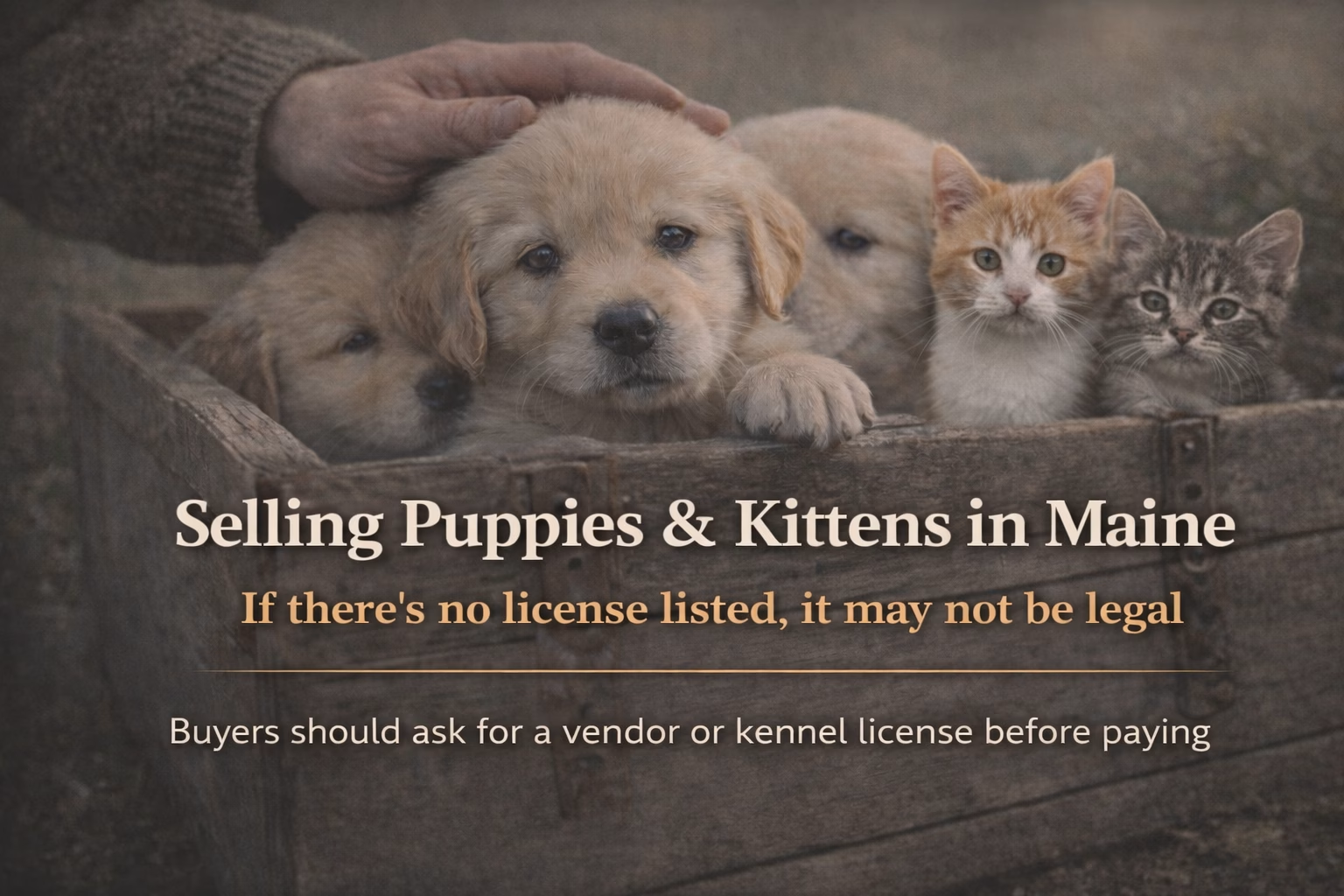
If you’ve ever scrolled through Facebook and seen a post about a litter of puppies or kittens for sale, you’ve probably noticed that most of them don’t mention licenses, health records, or any of the legal requirements that come with selling animals in Maine. That doesn’t mean those requirements don’t exist. It just means most people don’t know about them.
This post breaks down what Maine law actually requires, why it matters, and what buyers should watch out for before handing over any money.
There Are Two Different Licenses, Depending on Your Situation
Maine has two separate licensing categories for people who sell animals, and which one applies depends on how often you’re doing it.
Breeding Kennel License
A breeding kennel license is required if you breed and sell animals on a recurring basis. If you’re producing multiple litters a year, advertising regularly, or operating what most people would recognize as a breeding business, you need a kennel license issued through the State of Maine. Not sure which kennel license applies to your situation? The Maine Kennel License Guide walks through all three types.
Licensed breeding kennels are subject to inspection. They have to meet standards for housing, sanitation, and animal care. That accountability is the whole point.
Vendor License
Here’s the one most people have never heard of: a vendor license.
If you have a one-time litter, what people often call an “oops litter,” you still need a vendor license from the State of Maine before you can legally sell those puppies or kittens. This catches a lot of people off guard because they assume that if it’s just a one-time thing, no license is needed. That’s not how Maine law reads it.
The vendor license applies to dogs and cats alike. It doesn’t matter whether you’re selling a litter of German Shepherds or a litter of barn kittens. If money is changing hands, a license is required.
The vendor license requirement exists for the same reason as the kennel license. It creates a paper trail, establishes accountability, and gives buyers some basic protection.
Why Does This Actually Matter?
A lot of people see licensing requirements and assume it’s just about government paperwork. It isn’t. The licensing structure exists because selling animals without oversight creates real risks, both for the animals and for the people buying them.
Parvovirus in Dogs
Parvovirus is one of the most serious concerns with unregulated dog litters. Parvo is highly contagious, can survive in soil and on surfaces for months, and is often fatal in young puppies who haven’t completed their vaccine series. Puppies from unlicensed litters frequently haven’t been properly vaccinated. When those puppies change hands at six or eight weeks old, especially through informal sales or Facebook meetups, the virus can travel with them.
Buyers often don’t realize a puppy is sick until days after they’ve brought it home. By then, they’ve potentially exposed other animals, spent significant money on emergency vet care, and in too many cases, lost the puppy entirely. Parvo is currently active in western Maine. For more on what it looks like and how to protect your animals, see the parvovirus post.
Panleukopenia in Cats
Cats have their own version of this problem. Feline panleukopenia, sometimes called feline distemper or feline parvo, is a highly contagious and often fatal disease in kittens. It spreads the same way canine parvovirus does: through contact with infected animals, contaminated surfaces, and unvaccinated litters changing hands.
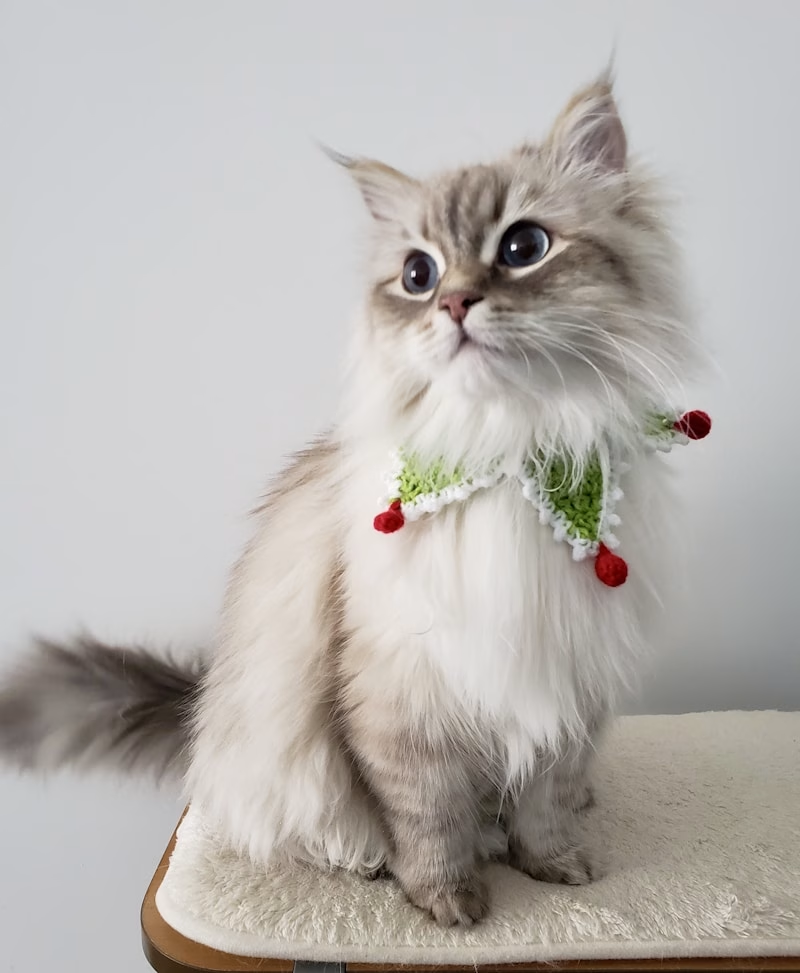
Kittens from unscreened litters often haven’t received their FVRCP vaccine, which covers panleukopenia along with rhinotracheitis and calicivirus. An unvaccinated kitten placed into a new home with existing cats, or picked up from a shelter environment before it’s fully vaccinated, is at serious risk. And like parvo in dogs, panleukopenia can linger in an environment for a long time after an infected animal has been there.
Vaccine Status
Before any puppy or kitten changes hands, it should have at least started its core vaccine series. For dogs, that means distemper, parvovirus, adenovirus, and parainfluenza, typically starting around six to eight weeks. For cats, that means the FVRCP combination vaccine on a similar schedule. A reputable seller will have documentation from a licensed veterinarian. If they can’t produce it, that’s a serious red flag.
Maine also requires rabies vaccination for all dogs and cats over three months of age. You can read more about that in the rabies vaccination post. An unvaccinated animal being placed into a new home with unknown animals is a risk to itself and to every animal it encounters.
Spay and Neuter
Unplanned litters don’t happen in a vacuum. They happen because the animals involved weren’t spayed or neutered. Every unplanned litter adds to the number of animals competing for homes, and the ones who don’t find homes often end up in shelters or on the street.
If you have an intact animal and aren’t actively breeding responsibly with health testing, proper oversight, and screened buyers, the most effective thing you can do for animal welfare in western Maine is get them fixed. SpayMaine offers low-cost options and can help if cost is a barrier.
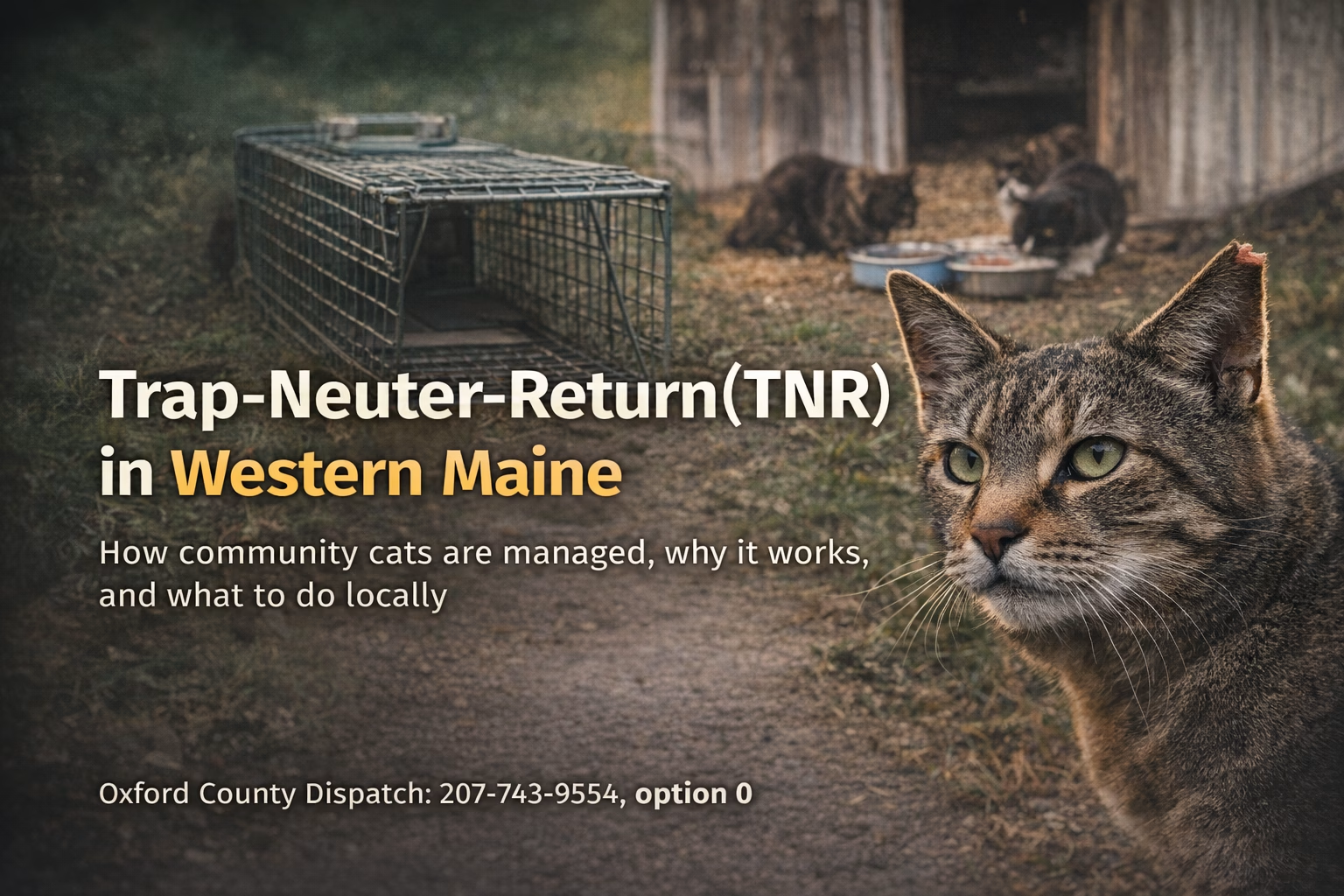
For cats specifically, uncontrolled reproduction is one of the biggest drivers of community cat populations. The TNR post covers how that cycle works and what’s being done about it in western Maine.
The Risks of Placement Itself
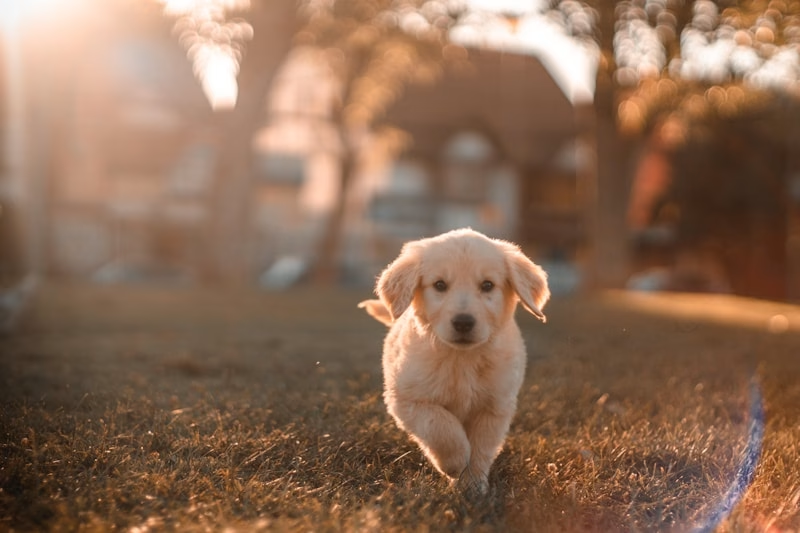
Even when sellers have good intentions, unscreened placements create problems. Puppies and kittens sold quickly through social media posts often go to buyers who haven’t fully thought through the commitment. A cute eight-week-old animal becomes an adult in less than a year, and shelters across Maine see the fallout from impulse placements every single day.
Responsible placement means asking questions. It means not selling to the first person who shows up with cash. It means thinking about where that animal is going to be in five years, not just five days. When sellers skip that step because they just want the litter gone, the animals pay the price.
Dogs who aren’t placed thoughtfully often end up at large, generating complaints that lead to enforcement. You can read more about how that plays out in the dogs at large post. Cats who aren’t placed thoughtfully often end up as strays. Maine’s rules on that are covered in the stray cat law post.
What to Watch for as a Buyer
If you’re looking to add a new animal to your family, here are some things worth paying attention to.
A seller who can’t show you proof of vaccination is a red flag. Or a seller who won’t let you see where the animals were raised is a red flag. Anytime a seller who mentions they “can’t post the price” because the platform will remove it is likely operating outside the rules in other ways too. A seller who has had multiple litters and seems surprised by the idea of a license is not operating legally.
None of this means every backyard litter is run by a bad person. A lot of people genuinely don’t know the requirements. But not knowing the law doesn’t change the risks to the animals or to you as a buyer.
The Maine Animal Welfare Program oversees licensing for kennels and vendors statewide. If you want to verify whether a seller is licensed, that’s your starting point.
If You Suspect Unlicensed Breeding in Your Area
Animal control handles these complaints. If you’re in Buckfield, Hartford, Sumner, West Paris, Stoneham, or the Oxford County Unorganized Territories, you can reach me through Oxford County Dispatch at 207-743-9554, Option 0. For areas outside my jurisdiction, contact your local ACO or the Maine Animal Welfare Program directly.
And if you’re in the market for a new pet, take a look at what’s available through Responsible Pet Care or Harvest Hills Animal Shelter before going the private breeder route. There are a lot of good animals waiting for homes right now.