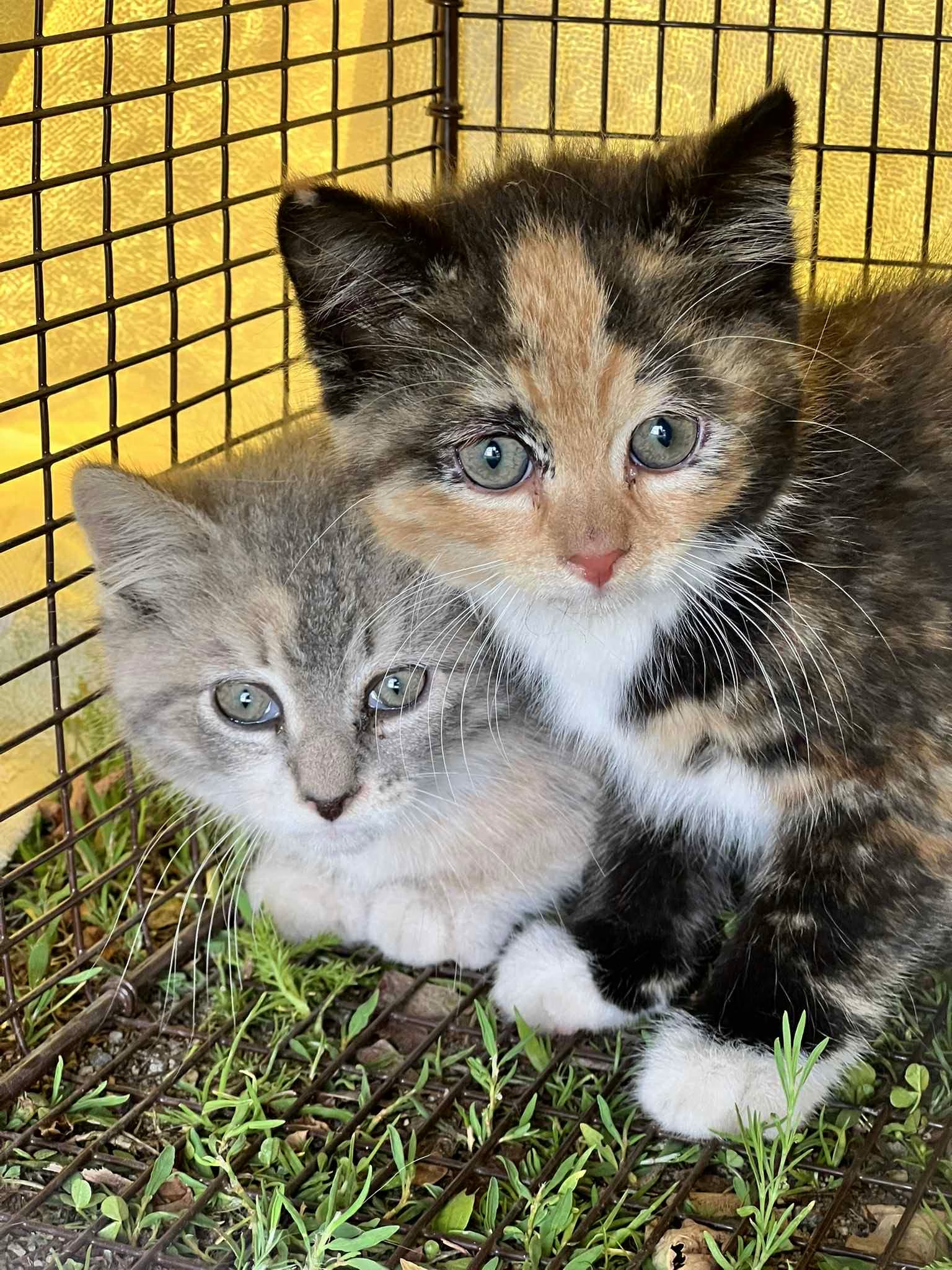
Hank and Rove came in as part of the West Paris TNR trapping round that brought in their mother, Flax. Both were too young to return to the colony. They entered the shelter system and have been working through the process since. Here’s where they stand.
Hank (tortie)
Named for a hank — a coiled bundle of spun flax fiber. Bold, scrappy, and full of personality despite a rough start. Hank transitioned into shelter care quickly and has been doing well. She’s the type who lets you know exactly what she thinks.
Rove (dilute gray)
Named for rove — unspun fiber, still being prepared for the wheel. Quiet, cautious, big-eyed. Rove is the patient one. Still finding her footing, but moving in the right direction.
Found Kittens? Here’s What to Do
Finding a nest of kittens — especially young ones with no mother in sight — is one of the most common calls I get, and also one of the most mishandled. If you have found abandoned kittens, what to do in Maine is an important question. The instinct to immediately pick them up and bring them inside is understandable, but it’s usually the wrong move.
Wait Before You Touch Them
Mother cats leave their kittens alone for hours. They do this to eat and rest. This also helps avoid drawing attention to the nest. If the kittens look clean and aren’t crying constantly, they are likely in a safe spot. There’s a good chance mom is nearby and will return. Give it several hours before assuming they’ve been abandoned.
The best thing you can do is observe from a distance. If you want to be sure, place a thin layer of flour around the nest. You could also put a piece of string across the entry point. Then come back in a few hours. If it’s been disturbed, mom came back.
Signs the Kittens Actually Need Help
Step in if you see any of the following: the mother has been confirmed dead. The kittens are crying continuously for more than a few hours. They appear cold, limp, or unresponsive. They are visibly injured. Or if they are very young. Their eyes are still closed, and they are clearly alone after four to six hours of observation.
Neonatal kittens, those with eyes still closed and typically under two weeks old, cannot regulate their own body temperature. They will not survive long without warmth and feeding. If mom genuinely isn’t coming back, time matters. Specifically, if you found abandoned kittens and are wondering what to do in Maine, it’s crucial to act quickly.
If You Need to Step In
Keep them warm first. Use a box lined with a soft towel. Place a warm water bottle wrapped in a cloth on one side. This setup will work in a pinch. Don’t put them directly on the heat source and make sure they can move away from it.
Do not feed them cow’s milk or human baby formula. Neither is appropriate for kittens and both can cause serious digestive problems. Kitten milk replacer — KMR — is available at most pet stores and is the right option if you need to feed before getting them to a shelter or vet. When you have found abandoned kittens and need to know what to do in Maine, remember that proper nutrition is essential for their survival.
Contact a shelter or rescue as soon as possible. In my coverage area, Harvest Hills Animal Shelter and Responsible Pet Care are both resources. You can also reach me through dispatch and I’ll point you in the right direction.
When It Involves a Feral or Stray Mother
The mother may be feral or semi-feral. You’re finding kittens on your property. TNR may be the right long-term answer. The kittens, depending on age, may still be socializable. The mother likely is not. Getting both into the right hands early makes a difference in outcomes.
If you’re in West Paris or anywhere in my coverage area and dealing with a feral cat situation, reach out. That’s exactly what the West Paris TNR Program is built for.
For more on the West Paris program and the full colony roster, see the West Paris TNR Program overview.